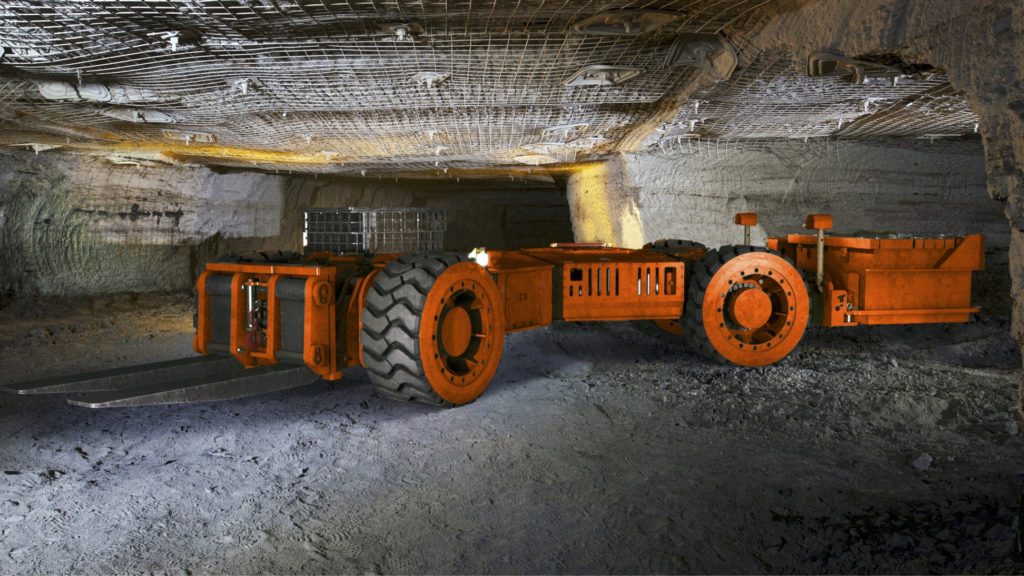
The global underground mining equipment sector is entering a period of sustained expansion, driven by accelerating demand for critical minerals, technological innovation, and the industry’s rapid shift toward automation and electrification.
As surface deposits become increasingly depleted and mining operations move deeper underground, the need for sophisticated equipment capable of operating in challenging environments has never been greater.
Multiple market analyses indicate strong growth potential for underground mining equipment over the next decade. The market is projected to expand from approximately USD 35-40 billion in 2024-2025 to between USD 53-61 billion by 2032-2034, representing compound annual growth rates ranging from 4.95% to 6.4% depending on regional factors and equipment categories.
This growth trajectory reflects both the increasing complexity of mining operations and the premium placed on advanced technology solutions.
Fortune Business Insights estimates the market will reach USD 53.75 billion by 2034 with a CAGR of 5.2%, while Grand View Research projects USD 72.9 billion by 2033 at a 6.4% growth rate. These variations stem from different methodologies and regional coverage, but all point to consistent upward momentum.
Mineral Demand and Energy Transition
The transition to renewable energy and electric vehicles has fundamentally altered demand patterns for underground mining equipment. Copper, nickel, lithium, and cobalt—essential components for batteries and clean energy infrastructure—increasingly require underground extraction as accessible surface deposits diminish.
The metal mining segment is expected to grow at the fastest pace, with projections indicating a 7.1% CAGR through 2033.
This shift has particular implications for equipment specifications, as battery-metal mining operations demand machinery capable of precision extraction in deep, geologically complex environments.
Mining companies are prioritizing equipment that can operate efficiently at greater depths while maintaining productivity standards.
Automation Revolution
Autonomous and tele-remote equipment adoption has accelerated dramatically, transforming underground mining from a primarily manual operation to an increasingly technology-driven industry. Sandvik leads the market in autonomous underground equipment, with Caterpillar and Epiroc following closely behind.
Current estimates indicate that approximately 1,243 tele-remote and autonomous underground mining trucks and load-haul-dump vehicles are deployed globally, with more than half concentrated in Australia and Canada.
Autonomous vehicle fleets now operate continuously across mining sites, achieving productivity gains of 15-20% compared to conventional operations. These systems utilize GPS, LIDAR, and computer vision to navigate complex underground terrains while optimizing routes for efficiency.
The integration of private 5G networks and IoT ecosystems has enabled real-time coordination of autonomous operations with thousands of sensors monitoring equipment health and environmental conditions.
Electrification and Sustainability
The shift toward battery-electric underground mining equipment represents one of the industry’s most significant transformations. The global electric mining equipment market was valued at USD 3.05 billion in 2024 and is projected to reach USD 10.51 billion by 2033, reflecting the urgency with which mining operators are addressing emissions concerns.
Regulatory pressures including the European Union’s Green Deal and EPA Tier 4 standards are compelling mining operators to transition from diesel-powered to electric fleets. Battery-electric equipment offers multiple advantages beyond emissions reduction: elimination of diesel fuel costs, reduced underground ventilation requirements, elimination of scheduled diesel engine maintenance, and consistent performance regardless of altitude.
Major manufacturers have launched innovative solutions to address underground charging challenges. Komatsu’s WX04B battery-electric LHD features a streamlined battery swap system that operates at ground level without requiring extensive underground infrastructure. This approach reduces costs and complexity while improving operational efficiency.
Equipment Segmentation and Regional Dynamics
Product Categories
Mining loaders dominate market share due to their essential role in material handling and ore transportation, capturing approximately 32.88% of the market in 2026. These machines are increasingly equipped with electric drivetrains and enhanced load capacity to improve productivity while reducing emissions in confined underground spaces.
Drilling equipment is experiencing particularly strong growth, with expectations of a 7.0% CAGR through 2033. Demand stems from underground expansion requirements for precise borehole development for blasting, rock support, and exploration activities. Technology upgrades including automated drill rigs and real-time rock condition monitoring are enhancing mining efficiency and driving investment.
Underground mining trucks, essential for hauling ore and waste materials over long distances within mines, are witnessing rising adoption of battery-electric and hybrid variants. These technologies address both sustainability goals and operational economics through lower ventilation requirements and reduced fuel costs.
Geographic Landscape
Asia Pacific represents the fastest-growing regional market, propelled by rapid industrialization, infrastructure expansion, and strong mineral demand. China leads regional growth through aggressive industrial policy supporting state-owned mining enterprises, with the Ministry of Industry and Information Technology integrating electric equipment into the “Made in China 2025” plan. Domestic manufacturers like XCMG and SANY supply electric loaders, shovels, and trucks integrated with 5G and AI systems for autonomous operation.
North America maintains technological leadership in underground mining equipment adoption, supported by established mining operations and strong automation uptake. The United States and Canada dominate regional demand, driven by metal mining and investments in battery-electric underground equipment.
Latin America, a major mining hub for copper, gold, and lithium, is experiencing increasing underground mining depth that drives demand for advanced, high-capacity equipment. Brazil and Argentina lead regional growth, supported by favorable geology and foreign investment.
Industry Challenges and Constraints
Despite robust growth prospects, the underground mining equipment market faces significant headwinds. Price fluctuations in raw materials such as steel, copper, and aluminum significantly impact manufacturing costs, while high initial capital investments can deter small and mid-sized mining companies from upgrading to advanced machinery.
Supply chain disruptions and geopolitical tensions have created procurement challenges, with steel price hikes and semiconductor shortages delaying deliveries of heavy-duty mining machinery across global markets in recent years. These economic constraints particularly impact cost-sensitive regions where capital availability remains limited.
Commodity price volatility affects cash flow and investment cycles, influencing purchasing decisions and potentially delaying equipment upgrades during economic downturns. Mining companies must balance the need for technological advancement with financial pragmatism in uncertain market conditions.
Competitive Landscape and Strategic Initiatives
The global underground mining equipment market exhibits moderate consolidation, with leading players including Caterpillar, Sandvik, Komatsu, Liebherr, Atlas Copco (Epiroc), Volvo Construction Equipment, and Hitachi Construction Machinery. These manufacturers are actively investing in autonomous mining systems, battery-electric vehicles, and digital mine solutions to enhance efficiency and sustainability.
Strategic partnerships between mining operators, equipment manufacturers, and government agencies are creating momentum for technology deployment. Public-private partnerships supported by policy incentives and national green mining strategies are accelerating large-scale electrification programs. Fortescue Metals has partnered with Liebherr to deploy electric haul trucks and excavators under a USD 2.8 billion electrification initiative, demonstrating the scale of investment in next-generation equipment.
Sandvik has announced ambitious plans to elevate itself to the top tier of the global mining equipment business with annual sales exceeding USD 10 billion, while continuing its leadership position in autonomous underground equipment. The company’s longstanding collaboration with Caterpillar, including the use of over 10,000 Cat engines across its equipment portfolio, exemplifies the strategic partnerships shaping the industry.
Future Outlook
The underground mining equipment market is positioned for consistent long-term growth through 2032 and beyond. Continued mineral demand, deepening mining operations, and accelerated adoption of automation and electrification will drive equipment procurement. Sustainability considerations including reduced emissions, energy efficiency, and improved worker safety will remain central to equipment innovation.
As mining operations become more complex and capital-intensive, demand for technologically advanced underground equipment will intensify. The convergence of artificial intelligence, machine learning, IoT sensors, and real-time data analytics is creating mining environments where equipment monitors and controls material flows dynamically, adjusting operations based on live data to maintain optimal efficiency.
The industry’s transformation from traditional diesel-powered manual operations to electrified autonomous systems represents a fundamental shift that will define underground mining for decades to come. Companies that successfully navigate this transition while managing cost pressures and supply chain challenges will be best positioned to capitalize on the sector’s robust growth trajectory.
Sources
-
https://www.openpr.com/news/4371936/underground-mining-equipment-market-is-projected-to-reach-usd
-
https://www.fortunebusinessinsights.com/underground-mining-equipment-market-103032
-
https://www.grandviewresearch.com/industry-analysis/underground-mining-equipment-market-report
-
https://finance.yahoo.com/news/global-underground-mining-tele-remote-135200465.html
-
https://www.grandviewresearch.com/industry-analysis/electric-mining-equipment-market-report
-
https://wundertrading.com/journal/en/learn/article/automated-mining
-
https://www.databridgemarketresearch.com/reports/global-mining-equipment-market
-
https://finance.yahoo.com/news/mining-equipment-market-trends-analysis-141000146.html

I am the CEO of Big Equipment Pros. We provide equipment industry news, data, and insights to help professionals make smart decisions and grow their businesses. We also work with equipment vendors and finance professionals to help them attract customers and expand through strategic marketing partnerships.
0 Comments