John Deere is taking major steps to strengthen its role in American manufacturing by investing in new facilities, rehiring workers, and accelerating its development of advanced farming technology. These moves come as the company responds to changing global supply chains, political pressure to bring production back to the United States, and rapid technological change in agriculture.
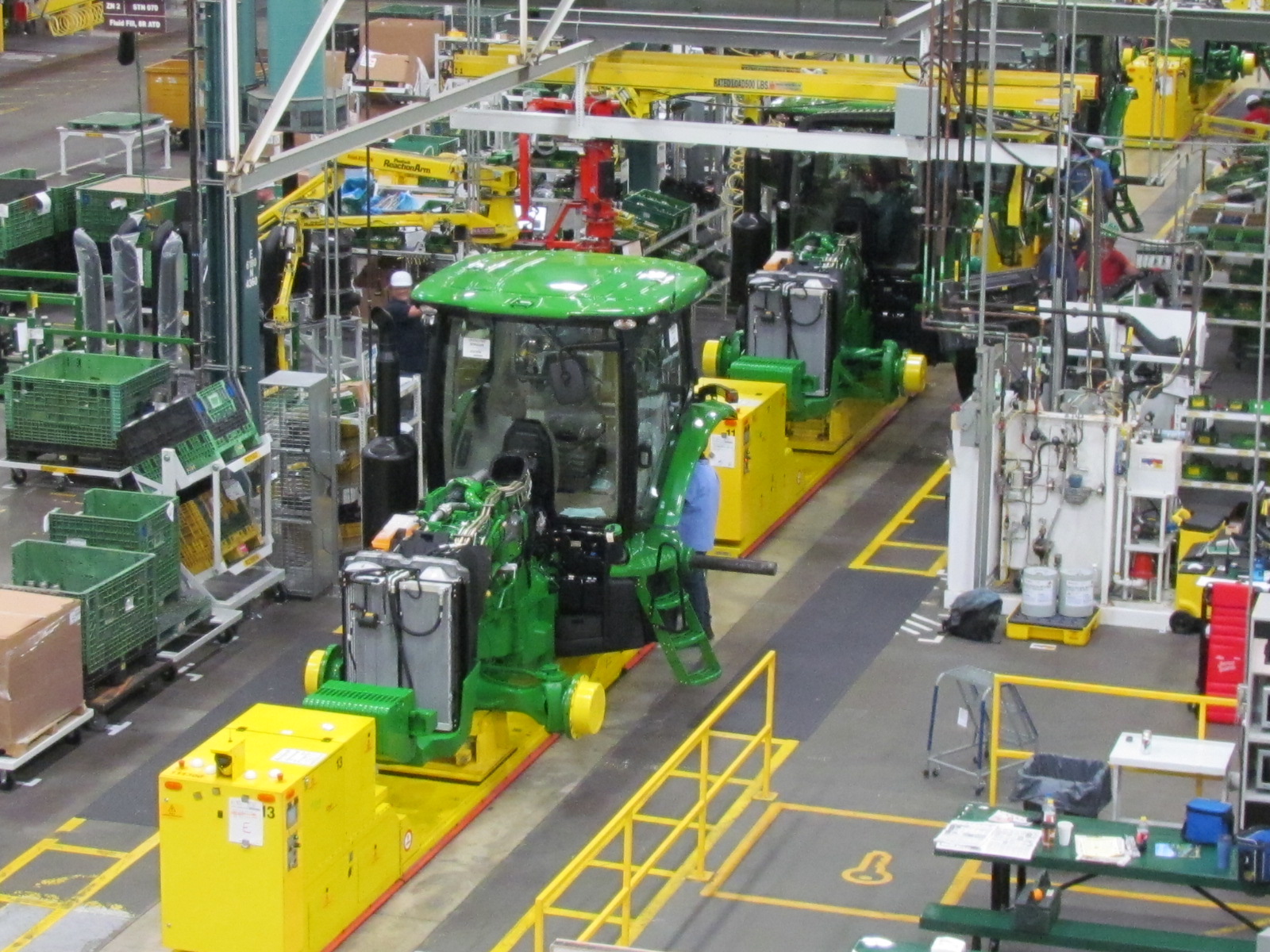
A key part of Deere’s strategy is the launch of two new U.S. sites: an excavator factory in Kernersville, North Carolina, and a distribution center near Hebron, Indiana. Both locations are expected to be operating within roughly a year, marking one of Deere’s most significant recent expansions in domestic manufacturing.
The North Carolina plant represents about a 70 million dollar investment and will shift production of future-generation excavators from Japan to the United States. Deere says the facility will employ more than 150 people, and together with the Indiana site, the company expects to create hundreds of new American jobs.
These projects are part of a broader plan to invest around 20 billion dollars in U.S. manufacturing over the next decade, signaling a long-term commitment rather than a short-term move.
Improving Outlook for Workers
The expansion is paired with better news for workers who had faced uncertainty in recent months. Deere is bringing back nearly 100 employees who were previously laid off, according to industry reports. In a separate move, about 24 employees are being recalled to the company’s plant in Dubuque, Iowa.
These recalls suggest that demand for Deere’s products may be stabilizing or rising, or that the company needs more labor as it prepares for new production lines and facilities. The agricultural equipment industry is often cyclical, influenced by factors like crop prices, interest rates, and global trade, so worker recalls can be an early sign that the outlook is improving.
Advancing Automation and Farm Technology
At the same time, Deere is deepening its push into high-tech farming. The company recently introduced updates to its tillage equipment that expand autonomous capabilities, meaning more machines can operate with less direct human control in the field. This fits into Deere’s larger effort to make farming more precise, efficient, and data-driven.
By focusing on autonomy and precision agriculture, Deere aims to help farmers manage labor shortages, reduce downtime, and make better decisions using real-time data. For the company, this technology also creates new opportunities for ongoing revenue through software, connectivity, and digital services that go beyond the sale of the equipment itself.
Strong Response from Financial Markets
Financial markets have reacted positively to Deere’s direction. The company’s stock price recently reached record highs as investors shifted money away from large technology firms and toward industrial and manufacturing companies. This surge reflects confidence in Deere’s earnings potential and in the value of its U.S. expansion and technology strategy.
Deere now sits at the intersection of two powerful themes: the return of manufacturing to the United States and the modernization of traditional industries through advanced technology. That combination makes the company especially attractive to investors looking for both stability and growth.
Political Attention and Broader Impact
John Deere’s decisions are also drawing attention from political leaders. President Donald Trump has publicly cited the company’s new North Carolina factory and other U.S. investments as examples of reshoring and job creation. He has mentioned Deere at rallies when highlighting the economy, manufacturing, and issues like E15 fuel policy.
Because of its size and history, Deere’s actions influence not only its own future but also the broader agricultural equipment industry and U.S. manufacturing. Its choice to shift production from Japan to the United States and to commit billions of dollars to domestic facilities may encourage other companies to make similar moves.
For farmers, the combination of more local production and more advanced technology could mean better access to equipment and tools that are increasingly essential to running modern operations

I am the CEO of Big Equipment Pros. We provide equipment industry news, data, and insights to help professionals make smart decisions and grow their businesses. We also work with equipment vendors and finance professionals to help them attract customers and expand through strategic marketing partnerships.
0 Comments